
01
Back to case studies
Real Transport Case
After Customs Inspection and Return: How 5 Lithium Battery Packs Were Exported to Rotterdam
After the customer's first export failed due to incomplete documents, VCEN rebuilt UN38.3, SDS/MSDS, packaging certificate, booking, customs, maritime declaration, warehousing, trucking, supervision, and final delivery to Rotterdam.
Customs inspection return5 lithium battery packsClass 9China to RotterdamDocument remediation
Customer industry
Lithium battery manufacturer
Product
5 lithium battery packs
DG class
Class 9 lithium batteries
Route
China → Netherlands · Rotterdam
Scope
UN38.3 / SDS/MSDS / packaging certificate / DG booking / customs / maritime / warehouse / trucking / supervision
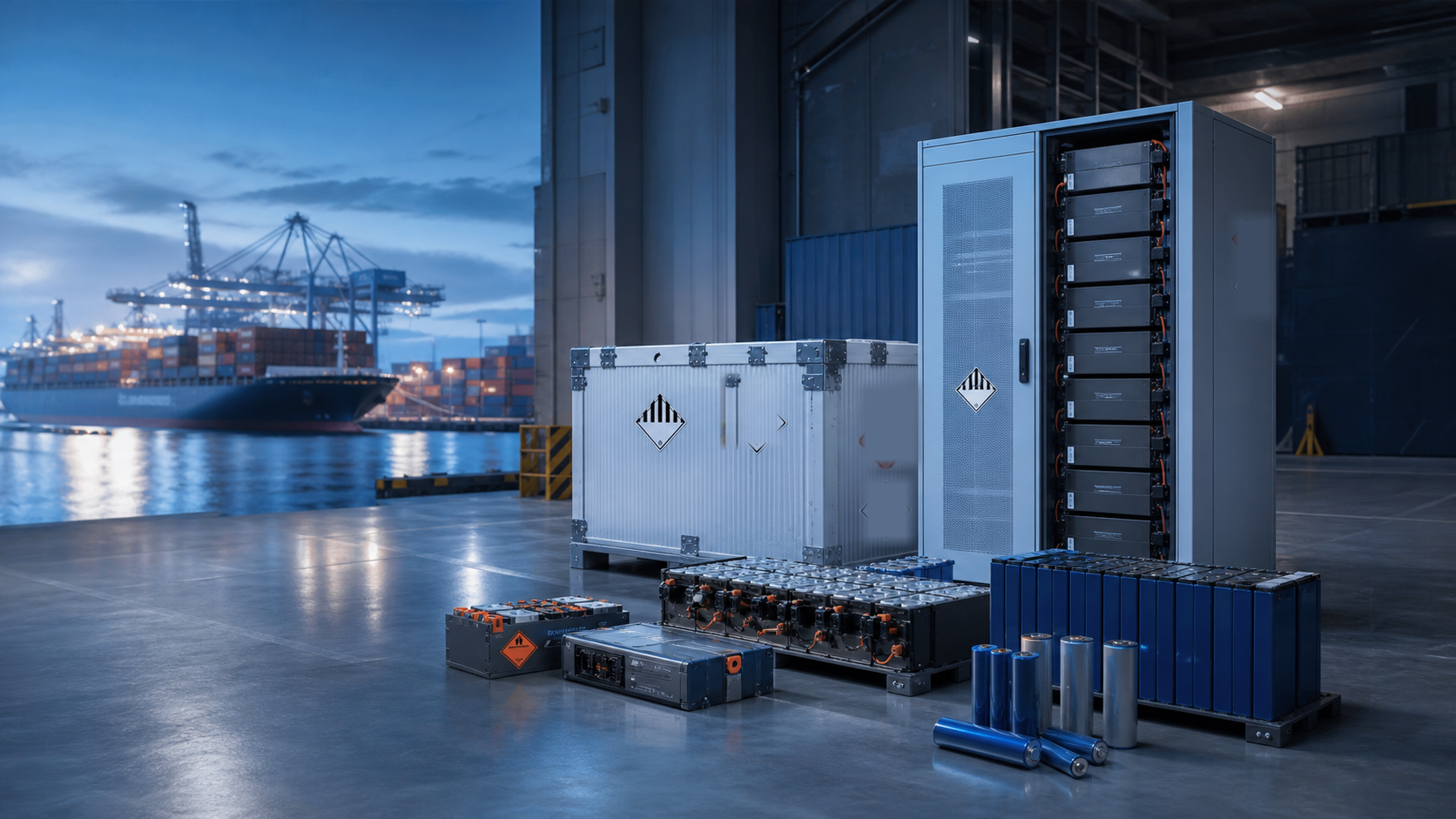
Customer challenge
One document mismatch caused customs inspection, penalties, and cargo return
The customer used the same cell to produce 5 lithium battery pack models. During the first export through another forwarder, only one cell MSDS and one cell UN38.3 report were used for all 5 packs. Because the documents did not clearly match each product model, the shipment was inspected by customs, fined, and returned, creating extra cost, delivery delay, and pressure from the overseas buyer.
02
Can a cell MSDS be used directly for battery packs?
03
How should the packaging certificate be arranged?
04
Can returned cargo be exported again after remediation?
Document remediation
VCEN did not rebook immediately. We first rebuilt the full document matching logic.
The core issue was not freight space. It was whether product models, test reports, SDS/MSDS, packaging certificates, and declaration documents could prove the same transport product.
Original plan
1 cell MSDS
+
1 cell UN38.3 report
Applied to 5 battery pack models
Status
Insufficient document correspondence
Risk
Customs inspection / penalty / return
Re-audit
VCEN remediation plan
5 battery pack models
Each product matched with its UN38.3 report
Each product matched with SDS/MSDS
Model, parameters, and transport data rechecked
Packaging certificate and booking declaration documents aligned
Status
Model, product, test report, and transport documents matched one by one
Execution process
From returned cargo remediation to final delivery in Rotterdam
VCEN rebuilt product documents and connected certification, packaging certificate, DG booking, warehousing, trucking, supervision, customs, maritime declaration, and destination delivery.
01
Product document re-audit
Reviewed the model, structure, rated energy, battery configuration, and transport requirements for all 5 battery packs.
02
Document correspondence check
Judged whether cell documents could apply to battery packs and confirmed which documents had to be prepared separately.
03
UN38.3 reports reissued
Coordinated certification institutions to issue corresponding UN38.3 reports for the 5 lithium battery packs.
04
SDS/MSDS rebuilt
Reorganized transport-compliant SDS/MSDS based on each product's information.
05
Packaging certificate
Helped prepare dangerous goods packaging documents and apply for packaging use identification.
06
DG booking rearranged
Submitted complete dangerous goods documents to the carrier for review and space confirmation.
07
DG warehousing
Arranged dangerous goods warehousing, cargo check, and loading preparation according to export milestones.
08
Trucking and loading
Arranged dangerous goods trucking, escort, and factory or warehouse loading.
09
On-site supervision
Supervisors checked packaging, labels, placement, securing, and loading operation.
10
Customs declaration
Completed export customs declaration and related customs review.
11
Maritime declaration
Submitted maritime dangerous goods declaration documents and completed release.
12
Vessel loading
The container entered the terminal and loaded as planned for Rotterdam.
13
Rotterdam arrival coordination
Followed arrival, document exchange, and clearance milestones at destination port.
14
Final delivery
Cargo was delivered to the consignee or designated warehouse.
Services provided
For this shipment, VCEN solved more than rebooking
Product document review
Model-report matching
UN38.3 coordination
SDS/MSDS rebuilding
Packaging certificate
DG booking
Carrier document review
DG warehousing
DG trucking
Escort arrangement
On-site supervision
Loading guidance
Export customs declaration
Maritime declaration
Rotterdam arrival coordination
Final delivery
Project outcome
The returned shipment was remediated and delivered to Rotterdam
From customs inspection and return to document reconstruction and final delivery in Rotterdam, VCEN helped the customer complete a full remediation of the dangerous goods export project.
01
Compliance documents rebuilt for all 5 products
Each battery pack model was matched with its corresponding UN38.3 and SDS/MSDS documents.
02
Required export documents obtained again
Packaging certificate, DG booking, customs, and maritime declaration documents were prepared.
03
Avoided another return caused by document mismatch
During re-export, the cargo was not returned again due to product-document correspondence.
04
Delivered to Rotterdam
The shipment completed China export, ocean freight, and destination delivery.
For lithium battery export, the easiest failure point is not freight, but document consistency
Many companies assume that if different battery packs use the same cell, the cell UN38.3 report and MSDS can be shared directly.
In actual dangerous goods export, cells and battery packs are not the same transport product. Whether different pack models can share documents must be judged based on product structure, rated energy, battery configuration, model differences, and transport regulations.
VCEN reviews not only DG booking and transportation, but also whether product models, test reports, SDS/MSDS, packaging certificates, and declaration data are consistent before cargo enters the port.
You may also be interested in these real transport cases
Class 3 / Flammable liquid
Paint Export with DG Booking and Declaration Coordination
View case
Class 9 / Battery-powered vehicle
How an Overseas Customer Purchased and Exported 20 Chinese New Energy Vehicles
View case
Class 2 / Aerosol cargo