This guide explains the 9 IMDG hazard classes from real export scenarios, helping shippers understand how classification affects booking, packaging, declaration, and carrier acceptance.
VCEN note
For dangerous goods export, the answer is rarely based on one document alone. Cargo attributes, packaging, carrier acceptance, port requirements, and declaration documents should be reviewed together before booking.
Why correct classification is the first export checkpoint
When customers first arrange dangerous goods export, the first question is often whether the cargo can be shipped. In practice, the answer usually starts with classification.
Dangerous goods export is a chain where classification determines the UN number, the UN number affects packaging, the packing group affects carrier acceptance, and all of these factors influence freight cost, transit time, declaration, and port operations. If the classification is wrong, later work is built on the wrong foundation.
| Affected area | Practical impact | Risk if classification is wrong |
|---|---|---|
| UN number | Different classes correspond to different UN entries | The carrier system may reject the booking |
| Packaging | Classification decides packing instructions and packing group | Cargo may be rejected by warehouse, terminal, or inspection |
| Carrier acceptance | Some carriers restrict certain classes or routes | Time is lost and rebooking costs increase |
| DG surcharge | Class and packing group affect surcharge calculation | Under-declaration may lead to destination penalties |
| Segregation | Some classes require segregation from others | Mixed loading violations may cause hold, rejection, or return |
The 9 IMDG dangerous goods classes
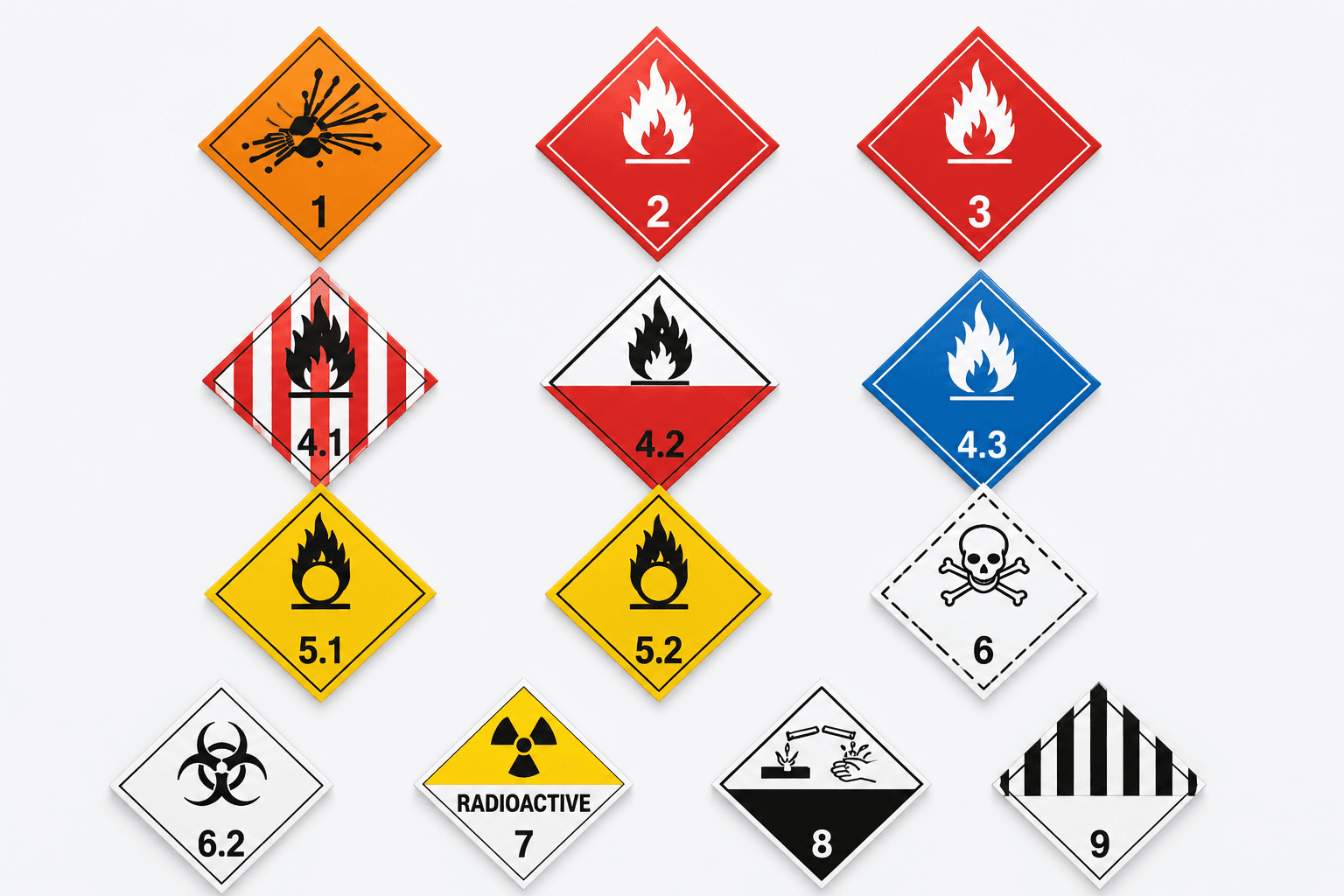
IMDG Code divides dangerous goods into 9 major classes. Some classes have divisions. The following overview focuses on categories commonly encountered in export shipping and the practical questions customers often raise before shipment.
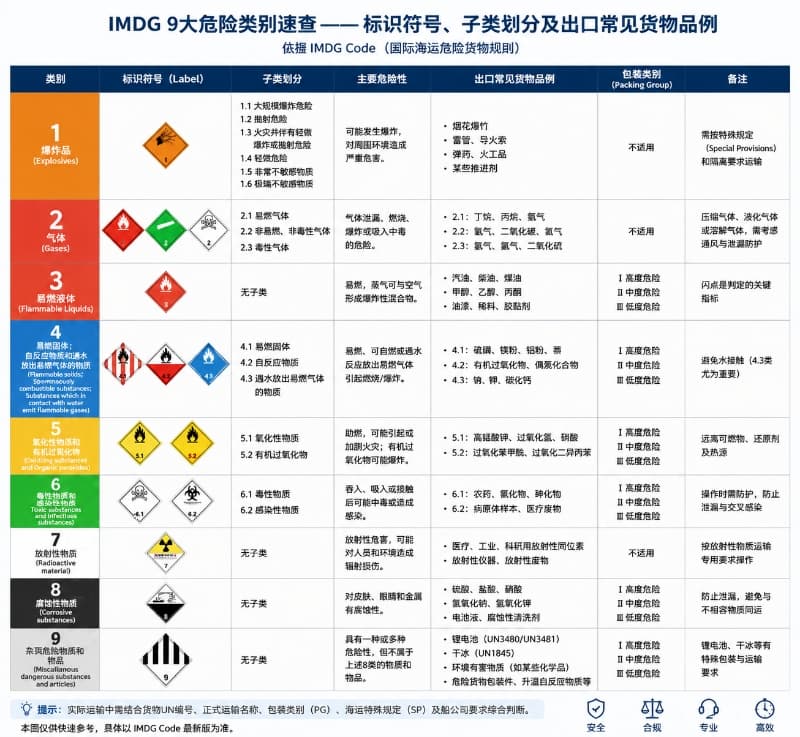
Class 3 - Flammable liquids
Class 3 generally covers liquids with a closed-cup flash point not exceeding 60 degrees Celsius, as well as liquid desensitized explosives. Common cargo includes paints, coatings, adhesives, inks, resin solutions, ethanol, isopropanol, fragrances, and thinners.
Practical reminder
Water-based does not automatically mean non-dangerous. If a water-based coating contains organic solvent and the flash point is below the regulatory threshold, it may still be Class 3 or may also have corrosive or environmental hazards.
Class 8 - Corrosive substances
Class 8 covers substances that cause irreversible skin damage or corrode metals under specified test conditions. Sodium hydroxide, acids, sodium hypochlorite, phosphoric acid, potassium hydroxide, and battery fluid are common examples.
Practical reminder
Concentration is critical. A substance may be Class 8 at one concentration but not regulated at another. Formula changes should trigger a new SDS or classification review.
Class 9 - Miscellaneous dangerous substances and articles
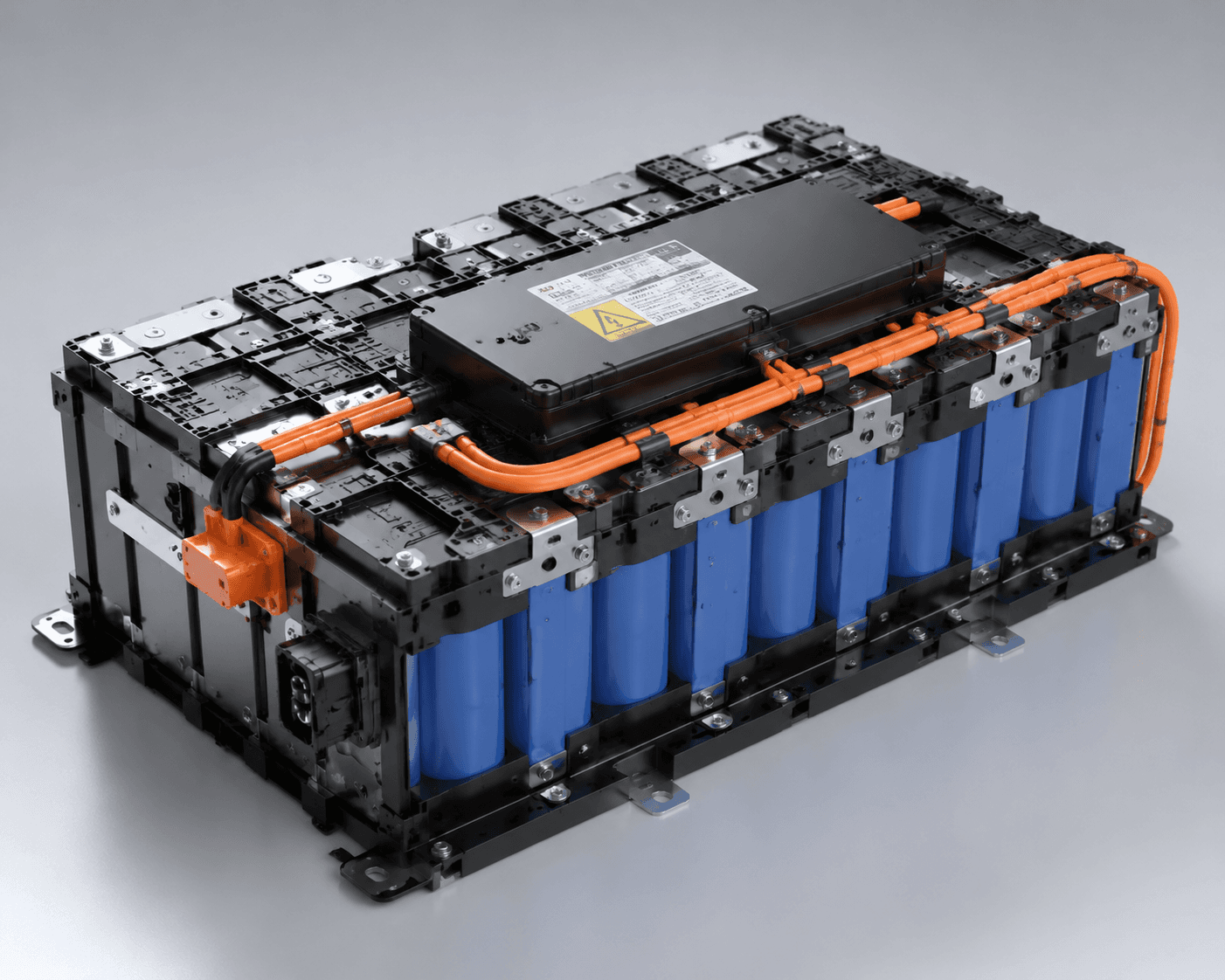
Class 9 includes dangerous substances and articles that present a transport hazard but do not fall into Classes 1 to 8. Typical examples include lithium batteries, environmentally hazardous substances, elevated temperature substances, and genetically modified microorganisms.
- Lithium batteries: UN3480, UN3481, UN3090, UN3091
- Environmentally hazardous substances: UN3077, UN3082
- Elevated temperature substances: UN3257, UN3258
- Other common examples: asbestos and expandable polymeric beads
Class 5 - Oxidizing substances and organic peroxides
Class 5.1 oxidizers may promote combustion by releasing oxygen. Class 5.2 organic peroxides are heat-sensitive and some require temperature-controlled transport. Examples include high-concentration hydrogen peroxide, bleaching agents, MEKP hardener, benzoyl peroxide, ammonium nitrate, and potassium permanganate.
Class 4 - Flammable solids, self-reactive or water-reactive substances
Class 4 covers flammable solids, substances liable to spontaneous combustion, and substances that emit flammable gas when in contact with water. Sulfur, activated carbon, sodium dithionite, magnesium powder, aluminium phosphide, and celluloid are typical examples.
Class 2 - Gases
Class 2 includes flammable gases, non-flammable non-toxic gases, and toxic gases. Aerosols are among the most common export products in this class. Classification depends on the propellant and contents, so different variants of the same product may fall into different divisions.
Class 6 - Toxic and infectious substances
Class 6.1 covers toxic substances that may cause serious harm or death by inhalation, ingestion, or skin contact. Class 6.2 covers infectious substances. Some products may also have flammable or corrosive secondary hazards, so the primary and subsidiary risks must be determined according to IMDG rules.
Class 1 and Class 7
Class 1 covers explosives such as fireworks, detonators, and ammunition. Class 7 covers radioactive materials. These cargoes are highly regulated and should be reviewed with specialist support before any shipment plan is confirmed.
How customers can check the hazard class
Step 1: Check SDS Section 14
SDS Section 14 contains the key transport information: UN number, proper shipping name, hazard class or division, packing group, marine pollutant status, and special provisions. This is usually the most direct starting point.
Important note
If Section 14 is blank or says not applicable, it does not always mean the product is non-dangerous. It may also mean the supplier has not completed transport classification assessment.
Step 2: Verify whether the SDS is reliable
- Check whether the SDS version is current. If it is more than three years old, an updated version is recommended.
- Check whether Section 3 composition matches the actual product being shipped.
- Check whether Section 14 transport classification is consistent with Section 2 hazards and Section 9 physical and chemical data.
A common issue is that Section 14 identifies a product as flammable, while Section 9 shows a flash point above 60 degrees Celsius. This type of internal conflict can lead to carrier rejection during DG review.
Step 3: Arrange a transport classification report when uncertain
- The product is a new chemical and no clear DGL entry can be identified.
- The mixture composition is complex and the supplier cannot provide a reliable SDS.
- The SDS contains contradictions or obvious classification errors.
How VCEN supports classification and shipment planning
- SDS pre-review: check whether Section 14 is complete and consistent with the rest of the SDS.
- IMDG DGL comparison: compare UN number, proper shipping name, packing group, and special provisions against IMDG Code.
- Classification report coordination: help connect third-party testing or classification resources when the SDS is missing or questionable.
- Carrier matching: match cargo class, route, and documentation with carriers that can accept the shipment.
VCEN reminder
The professional value of classification is not memorizing the nine classes. It is building a reliable path from SDS review to carrier acceptance and shipment execution.
Key points
Classification is the foundation of DG export. It determines UN number, packing group, carrier acceptance, and operating requirements.
SDS Section 14 is the most direct source for transport classification, but it must be checked against the actual cargo and other SDS sections.
Mixtures, concentration changes, and incomplete SDS files often require additional review or a third-party classification report.
VCEN helps customers review SDS, compare IMDG DGL requirements, coordinate classification reports, and match suitable carriers.