Exporters do not need to memorize IMDG Code, but they should understand how the rules affect classification, packaging, labels, segregation, carrier acceptance, and shipment cost.
VCEN note
For dangerous goods export, the answer is rarely based on one document alone. Cargo attributes, packaging, carrier acceptance, port requirements, and declaration documents should be reviewed together before booking.
Why exporters should understand IMDG
What is IMDG Code?
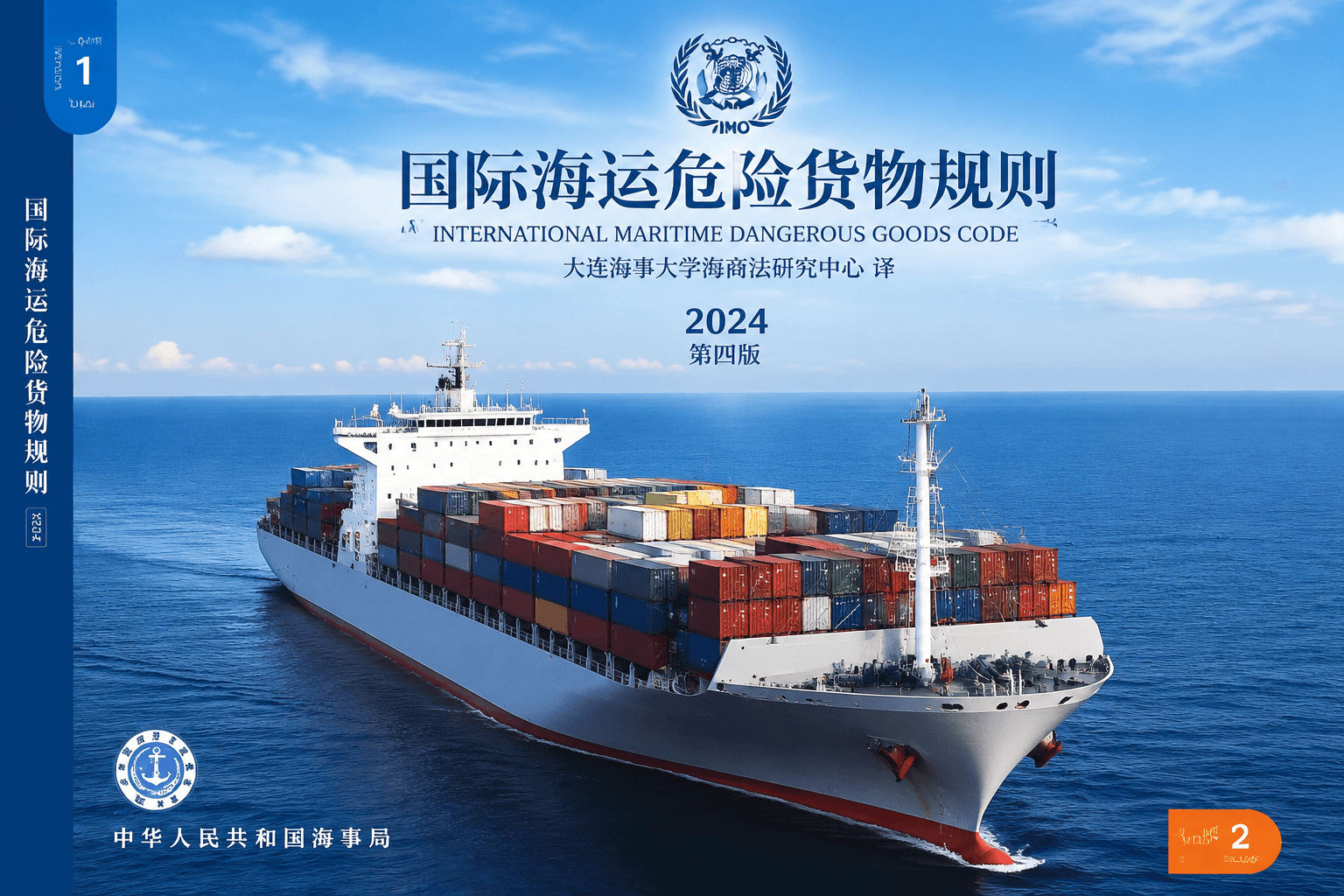
IMDG Code, the International Maritime Dangerous Goods Code, is issued by the International Maritime Organization. It is the global standard used by shipping lines, ports, maritime authorities, and operators to manage dangerous goods by sea.
It is not only a book for specialists. Every rule eventually affects export operations: how a product is classified, what packaging can be used, which labels must be applied, where cargo may be stowed on board, and which goods cannot be loaded together.
- Classification decides the packaging standard, label requirements, transport conditions, and cost.
- IMDG Code is the baseline, while each carrier may apply additional acceptance restrictions.
- Understanding the basics helps exporters avoid over-packaging, rejected packaging, or unnecessary rework.
VCEN reminder
IMDG Code is not something exporters need to memorize. It is something they should use to understand why carriers and ports ask for specific documents, marks, packaging, and segregation arrangements.
How IMDG affects export operations
Concept 1: Classification
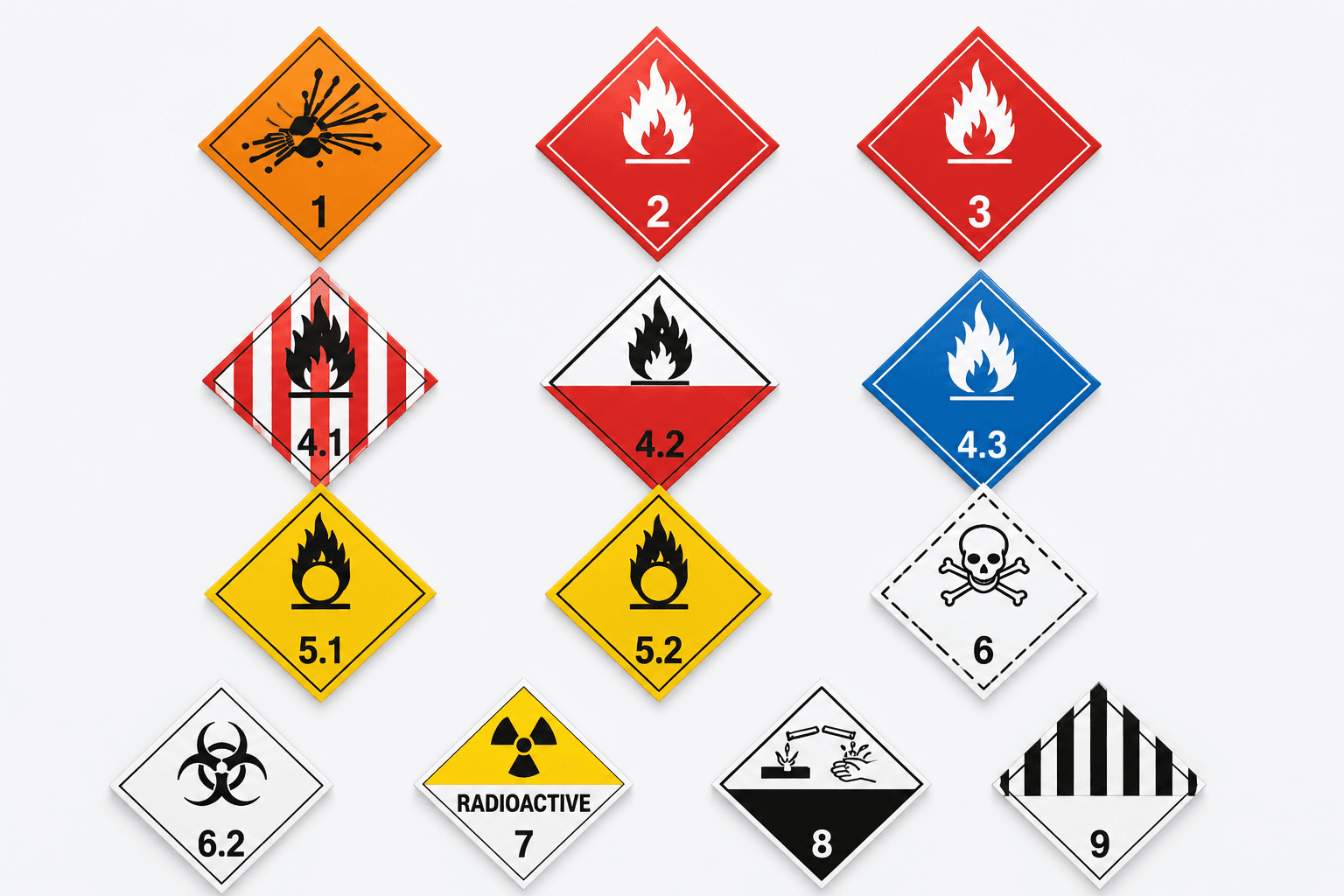
IMDG Code divides dangerous goods into nine classes. Classification is the foundation of the entire shipment. If the class or UN number is wrong, the packaging, labeling, segregation, and carrier review can all become wrong.
Classification should be based on the final product characteristics, not only on raw material names. A pure solvent may be Class 3 under UN1993, while a diluted cleaning agent may fall under another UN number or may not be regulated, depending on its actual properties.
Concept 2: Packaging
IMDG Code specifies packing instructions for dangerous goods, including package type, material, maximum quantity, inner packaging, outer packaging, and packing group requirements. The packing group indicates the level of danger and the required packaging strength.
| Packing group | Danger level | Packaging requirement |
|---|---|---|
| PG I / X | High danger | Highest packaging strength |
| PG II / Y | Medium danger | Standard dangerous goods packaging strength |
| PG III / Z | Lower danger | Basic dangerous goods packaging strength |
Packaging rule
Packaging marks must meet or exceed the product's packing group requirement. PG II cargo may use PG I packaging, but it cannot use PG III packaging.
Concept 3: Marking and labeling
| Type | What it includes | Common problem |
|---|---|---|
| Marking | UN number and proper shipping name | Only commercial name is shown |
| Labels | Diamond hazard class labels | Subsidiary risk label is missing |
| Orientation arrows | Required for certain liquid packages | Incorrect or missing arrows |
| Marine pollutant mark | Required when cargo is a marine pollutant | SDS or package mark is inconsistent |
Concept 4: Segregation
Segregation rules decide whether different dangerous goods can be loaded in the same container, same cargo hold, or same vessel area. If two cargoes must be separated under IMDG rules, they may need different containers, which directly affects cost and schedule.
Common IMDG questions from exporters
Is my product dangerous goods?
The answer should be based on physical and chemical properties, not on product names or commercial descriptions. If the SDS Section 14 lists a UN number and transport hazard class, the product is normally regulated for sea transport.
Does each IMDG version update affect my shipment?
IMDG Code is updated every two years. Most updates do not change day-to-day operations for every product, but some updates may affect UN numbers, packing instructions, limited quantity rules, or lithium battery requirements.
What is Limited Quantity?
Limited Quantity provisions may simplify packaging and marking requirements when the quantity per inner package is within the limit for that UN number. It can reduce cost for small shipments, but the conditions are strict and not every hazard class is eligible.
Pre-shipment IMDG checklist
- Has the product class and UN number been confirmed through SDS Section 14?
- Does the packaging meet the applicable IMDG packing instruction?
- Does the package carry the required UN number, proper shipping name, and hazard label?
- If the product has subsidiary risk, are all required labels applied?
- Is the cargo a marine pollutant, and is the mark applied where required?
- Will multiple dangerous goods be loaded together, and has segregation been checked?
- Can Limited Quantity apply to this small shipment?
- Does the carrier accept this hazard class and route?
How VCEN helps
Exporters do not need to read IMDG Code line by line. VCEN helps translate the rules into practical shipment decisions: classification, packaging, labels, segregation, carrier selection, and booking preparation.
- Classification confirmation: review product information and SDS to confirm the hazard class and UN number.
- Packaging plan: identify the applicable packing instruction and recommend a compliant and economical packaging solution.
- Marking and labeling guidance: list the marks and labels required for each package.
- Segregation planning: check whether different DG cargoes can be loaded together or need separate containers.
- Carrier matching: match cargo class and route with carriers that can accept the shipment.
- Limited Quantity assessment: evaluate whether simplified requirements can apply to small shipments.
VCEN practice
After receiving customer cargo information, VCEN can provide an initial operational assessment covering classification, packaging requirements, carrier acceptance, and expected transport conditions.
Case reminders
Case 1: Water-based paint was not ordinary cargo
A customer exported water-based coating and assumed it was non-dangerous cargo. SDS review showed UN1263, Class 3, PG III, with a flash point of 42 degrees Celsius. The ordinary packaging already prepared by the customer had to be replaced with UN specification packaging.
Lesson
Water-based does not automatically mean non-flammable. Classification should follow SDS data, especially flash point and Section 14 transport information.
Case 2: Incomplete UN package mark caused rework
A customer purchased packaging marked only with a partial code. During port inspection, the package marking was considered incomplete. The customer had to replace the packaging before shipment.
Lesson
UN packaging is not compliant simply because it looks strong. The complete UN package mark and supporting documents should be confirmed before packing.
Case 3: Mixed loading failed due to segregation
A customer planned to load paint, thinner, and curing agent in one container. Review showed that Class 3 and Class 5.2 cargo required segregation, and the shipment had to be split into separate containers.
Lesson
Related products are not necessarily compatible for transport. Segregation should be checked before loading plans are confirmed.
Key points
IMDG Code is the international baseline for dangerous goods sea transport, but carriers may add their own restrictions.
Classification is the starting point. Once the class or UN number is wrong, packaging, marks, labels, and segregation can all become wrong.
Packaging must follow the applicable IMDG packing instruction and UN package marking requirements.
Segregation rules decide whether different dangerous goods can be loaded in the same container.
Exporters should turn IMDG rules into a clear operational checklist before booking.